Engaging Boys and Men
How do we shift the cultural norms and expectations that impact thinking and behavior?
How do we create meaningful and sustained change?
How do we move beyond the small pool of male allies to engage men and boys more broadly?
We have been exploring these questions for over a decade. In that time, we’ve:
Reviewed countless policy and practice frameworks.
Conducted research and evaluation.
Worked with community and government partners; and
Worked directly with boys and men in their respective influential spaces.
Through these efforts, we have found that the following principles work to reduce resistance and increase engagement among men and boys – even those who have no particular interest in gender equity and violence prevention:
We go to them: Rather than trying to recruit men and boys to come to programs in our spaces, we work in their spaces – in the places where they learn, work, play and socialize both physically and virtually.
We work to understand their priorities, fears, and concerns. Our research has demonstrated the importance of cultivating empathy and seeking to genuinely understand men’s/boy’s perspectives and concerns. You can’t change what you don’t understand.
We work to shift social norms within a particular network. Research shows that our social environment has a profound influence on our behaviors. For this reason, individual changes achieved through a program can be lost when that person returns to his network of friends or coworkers. By focusing on changes in the network, individual changes are more likely to be sustained.
We work with positive role models (or key influencers) within a network. As humans, we are constantly looking to others in our network to figure out how we should behave. The people we tend to reference the most are those who are liked and respected – so that’s who we work with. We build the capacity of these ‘positive role models’ to signal a different set of expectations through small, everyday actions.
We start with their priorities, not ours. We build trust and engagement by focusing on their priorities. When we help them solve the problems they want to solve, we gain their trust, enabling us to more effectively
1) engage in conversations that would otherwise have elicited eyerolls or other dismissal, and
2) challenge existing ideas and behaviors.
We focus on behaviors more than attitudes. Changing attitudes can be helpful, but that doesn’t always translate to behavior change – which means that we can’t stop gender-based violence and discrimination through attitudes alone.
We develop transferable skills. Men and boys are motivated to learn skills that align with their interests and motivations – so we use that as a starting point for engagement. For example, the ability to receive feedback from a teacher or coach requires many of the same skills needed to reduce violence (e.g., self-regulation, managing thought distortions, active listening, and perspective-taking). Once we’ve built some trust, we help them connect these same skills to problems of gender-based violence and discrimination.
Our Unique Programs
Men Talk Consent
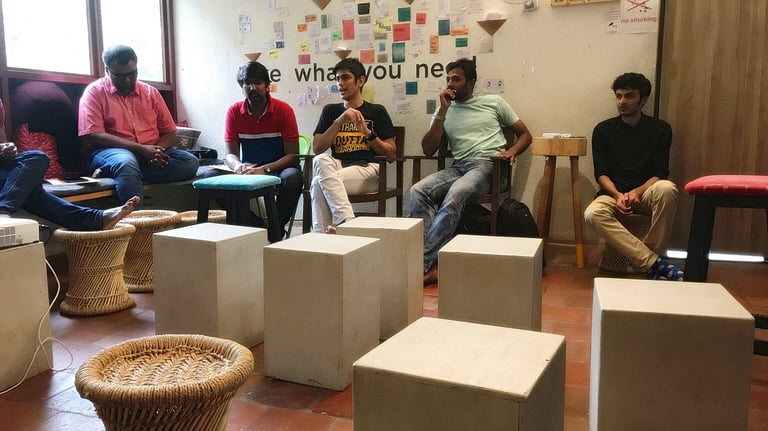
These workshops emphasized the need to understand that lack of clarity is lack of consent by engaging men in conversations about sexual violence by framing it as a societal issue, creating welcoming environments, and addressing topics that matter to them.
These workshops were targeted for men to make them more comfortable when they talk about the Right to Consent of a woman thereby highlighting the need for gender- specific workshops; especially, Men- addressing- Men workshops.
unMASC - School Positive Masculinity Program
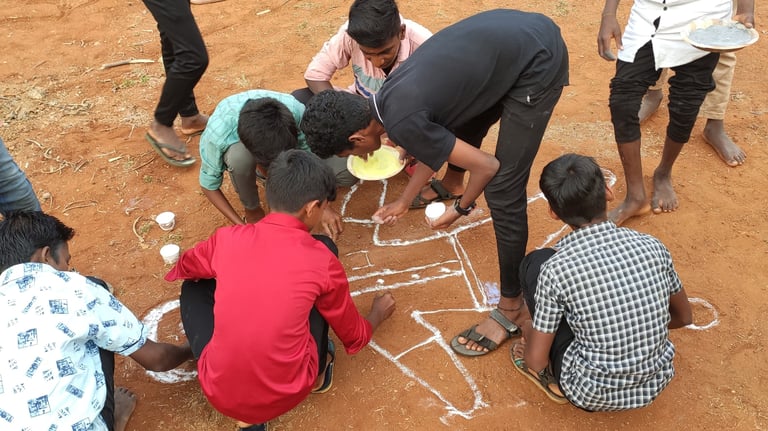
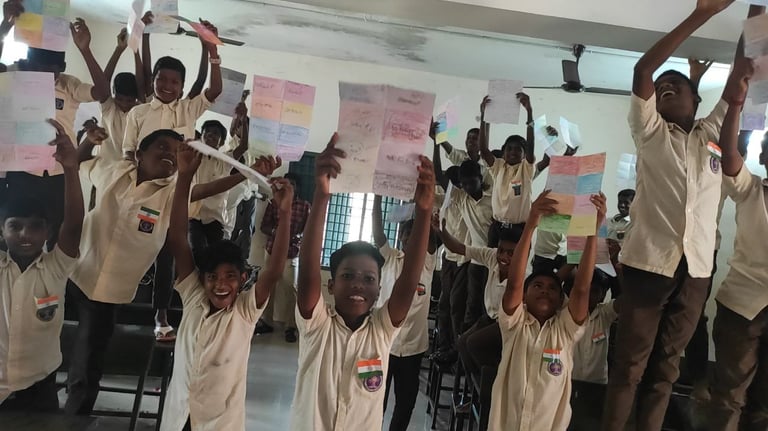
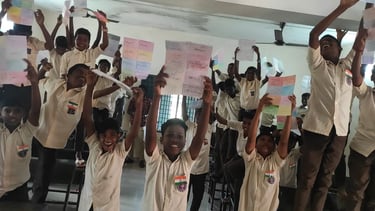
A lifeskills program engaging adolescent boys in schools to redefine masculinity, challenge toxic norms, and foster healthy behaviors like vulnerability, emotional intelligence, and courage to end gender-based violence and promote gender equity. It provides a safe space for boys to learn positive traits, moving beyond traditional limitations to build meaningful relationships and understand diverse masculinities through peer learning, mentoring, and interactive sessions.
better{MEN}t:
"Making of Men" Camps
At the heart of knowing and keeping themselves safe and being safe for every others: better[MEN]t camp for the Adolescent Boys towards Healthy Masculinity and Violence Prevention is an urgent call to unravel masculinity and redefine it. When our boys explored how our culture's narrow definition of masculinity is harming our boys, men and society at large and unveils what we can do about it.